WordPress development for a growing business needs more than a polished theme. It needs a content model, editing system, technical foundation, and ownership plan that can support new services, campaigns, team members, and integrations without turning every change into a development project.
Scalability does not mean adding every possible feature at launch. It means making deliberate choices so the site can change safely as the business learns.
Start WordPress development with content structure
Before choosing plugins or designing pages, map the questions potential customers ask and the actions the business needs them to take. Service pages should address commercial intent, supporting guides should answer research questions, and case studies should provide relevant evidence.
Define which information belongs in reusable fields and which belongs in flexible page content. Consistent data for services, team members, locations, products, or resources makes templates easier to maintain and gives internal linking and structured data a reliable source.
Use Gutenberg as a controlled design system
Gutenberg blocks and patterns can give a marketing team useful publishing freedom without requiring code. The important detail is restraint. Define typography, spacing, colors, content widths, image behavior, and allowed variations so new pages remain recognizable and accessible.
- Create reusable patterns for common page sections.
- Use block styles instead of one-off inline formatting.
- Lock structural blocks when accidental changes would break a template.
- Give editors clear labels, instructions, and realistic previews.
- Remove unused block options that create inconsistency.
A good editorial system makes the correct publishing choice easier than the incorrect one.
Treat performance as an architectural requirement
Performance begins with lean templates, efficient queries, appropriately sized images, limited third-party scripts, and reliable hosting. A cache plugin cannot fully compensate for an oversized theme, duplicated libraries, slow database work, or an unstable integration.
Set performance budgets for representative templates and test real tasks on mobile. Review server response time, image delivery, fonts, JavaScript, layout movement, and interaction delays. Re-test after adding analytics, consent tools, forms, chat, or advertising scripts because production integrations often change the result.
Build technical SEO into the templates
Clean headings, descriptive URLs, canonical rules, metadata, structured data, XML sitemaps, internal links, and crawl controls should be planned before content migration. Custom post types and taxonomies need clear archive, indexation, and sitemap rules.
Programmatic templates should require enough unique information to justify an indexable page. Publishing many interchangeable location, service, or portfolio pages may increase the URL count without increasing search value.
Choose plugins by responsibility
Each plugin adds code, settings, updates, and a possible failure point. Choose tools with a clear owner and purpose. Avoid installing several plugins that attempt to control the same cache, redirect, security, form, or SEO behavior.
Record why important plugins were selected, which data they store, how they are licensed, and what would happen if they were removed. This turns a plugin list into a maintainable operating system.
Plan security and maintenance
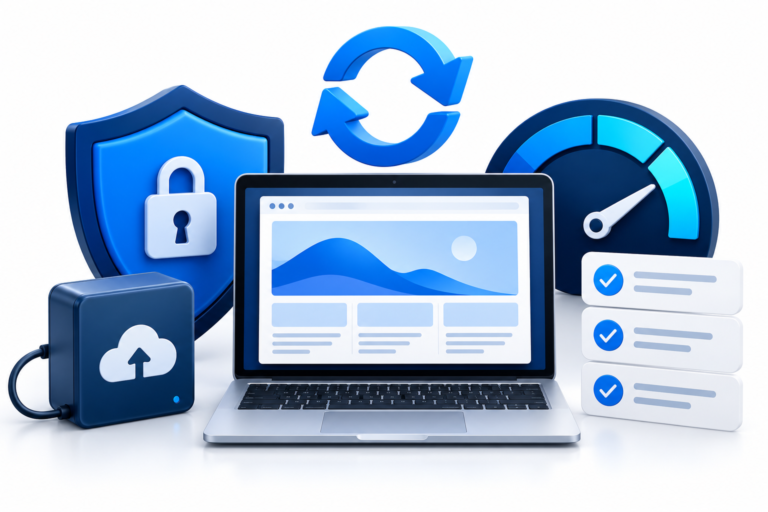
Use least-privilege accounts, strong authentication, tested backups, supported PHP and WordPress versions, and a defined update routine. Separate administrator, editor, and integration permissions. Protect forms against abuse and avoid storing sensitive data that the website does not need.
Maintenance should include uptime checks, error-log review, form testing, broken-link checks, analytics validation, performance monitoring, and periodic content review. Assign each task to an owner and document recovery steps before an emergency.
Design integrations for change
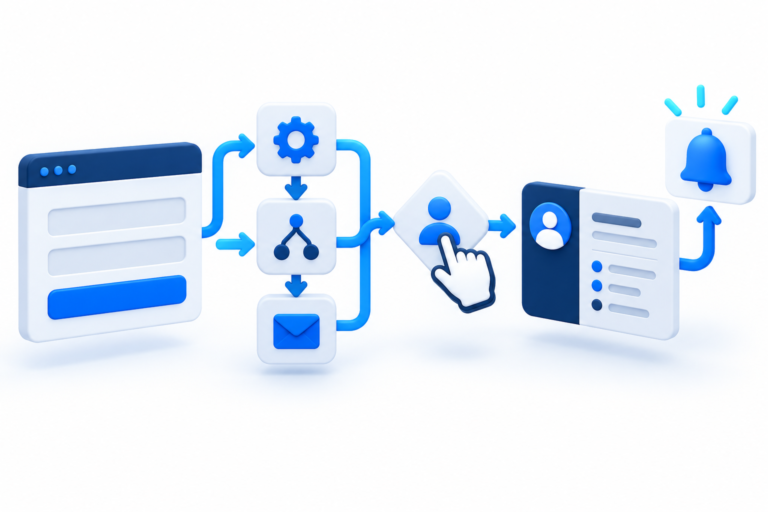
CRM, email, payment, automation, search, and analytics integrations should fail visibly. Use stable interfaces, validate inputs, log important actions, and keep business rules documented outside a single developer’s memory. When an external service changes, the team should know which site journeys need testing.
Plan your WordPress development handover
- Content types, fields, templates, and URL rules are documented.
- Editors know how to use approved blocks and patterns.
- SEO, analytics, forms, redirects, backups, and caching are tested.
- Licences, renewals, access, and third-party services have owners.
- Known limitations and future improvements are recorded.
- A staging and recovery process is available for risky changes.
A scalable build gives the organization more control while keeping quality predictable. If you are planning a new WordPress website or untangling an existing one, contact Prominice with the current publishing workflow, integrations, and growth plans.
For budget and scope preparation, use our website development cost and timeline guide. For technical performance guidance, see the official WordPress optimization handbook.
For implementation and handover, explore our WordPress and CMS development services. Share your editable page types, integrations and maintenance needs to define the scope.