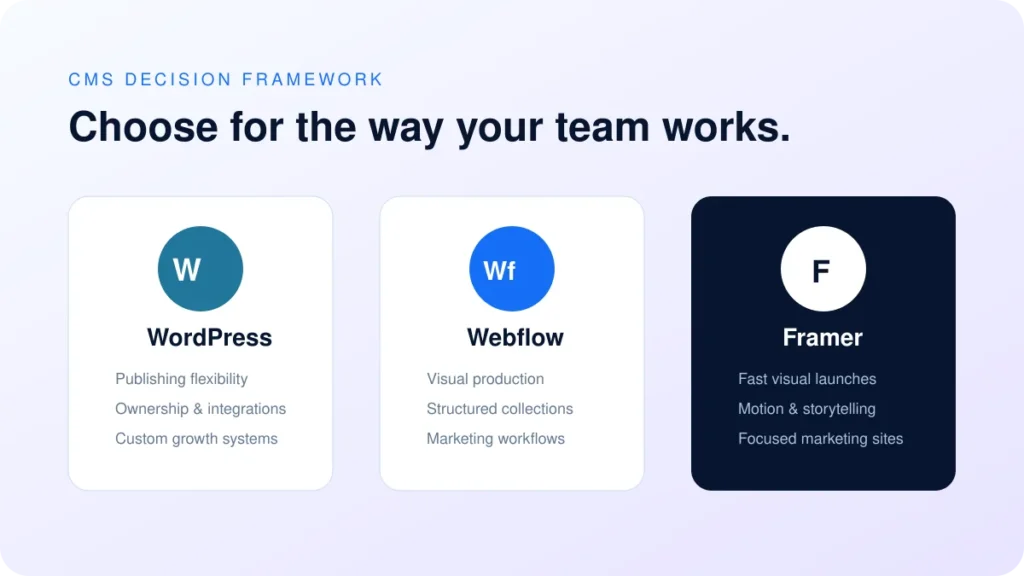
Choosing a content platform is a business decision disguised as a design decision. The best option depends on how often the site changes, who publishes, which integrations matter and how much control the organization needs over future development.
- Start with the publishing workflow
- Compare design and component control
- Evaluate integrations and data ownership
- Plan technical SEO and performance
- Consider team skills and governance
- Choose for the next three years
Start with the publishing workflow
This stage turns broad ambition into a decision the team can evaluate. Identify the people affected, the information they need and the friction that currently slows progress. Specific evidence prevents a fashionable tool or isolated symptom from becoming the entire strategy. In CMS, this keeps Start with the publishing workflow connected to an observable business outcome.
What to check
- Define the decision this work should improve.
- Document the current state, owner and available evidence.
- Prioritize the smallest useful improvement before expanding scope.
Compare design and component control
Document the normal journey and the important exceptions. Permissions, approvals, content ownership and failure states often shape the experience more than the ideal path. Clear responsibilities also make estimates and implementation reviews more reliable. In CMS, this keeps Compare design and component control connected to an observable business outcome.
What to check
- Define the decision this work should improve.
- Document the current state, owner and available evidence.
- Prioritize the smallest useful improvement before expanding scope.
Evaluate integrations and data ownership
Technology should support the operating model rather than dictate it. Review integrations, data quality, security, accessibility and maintenance alongside interface requirements. This creates a foundation that can grow without unnecessary complexity. In CMS, this keeps Evaluate integrations and data ownership connected to an observable business outcome.
What to check
- Define the decision this work should improve.
- Document the current state, owner and available evidence.
- Prioritize the smallest useful improvement before expanding scope.
Plan technical SEO and performance
A polished result depends on how it behaves between major moments. Loading, empty, error and recovery states should use helpful language and preserve user confidence. Responsive behavior must be planned for real devices and not treated as a final adjustment. In CMS, this keeps Plan technical SEO and performance connected to an observable business outcome.
What to check
- Define the decision this work should improve.
- Document the current state, owner and available evidence.
- Prioritize the smallest useful improvement before expanding scope.
Consider team skills and governance
Reusable patterns improve speed only when they protect clarity. Define typography, spacing, controls and content rules so new additions remain consistent. Documentation should explain when a component is appropriate, not merely how to insert it. In CMS, this keeps Consider team skills and governance connected to an observable business outcome.
What to check
- Define the decision this work should improve.
- Document the current state, owner and available evidence.
- Prioritize the smallest useful improvement before expanding scope.
Choose for the next three years
Measurement should reflect the purpose of the work. Combine technical monitoring with meaningful actions such as qualified enquiries, completed tasks or publishing efficiency. Review results after launch and prioritize improvements using evidence rather than assumptions. In CMS, this keeps Choose for the next three years connected to an observable business outcome.
What to check
- Define the decision this work should improve.
- Document the current state, owner and available evidence.
- Prioritize the smallest useful improvement before expanding scope.
Turning the framework into action
A practical plan assigns ownership, timing and measurement to each recommendation. Prominice can help translate the framework into a focused project estimate based on your current systems and goals.